
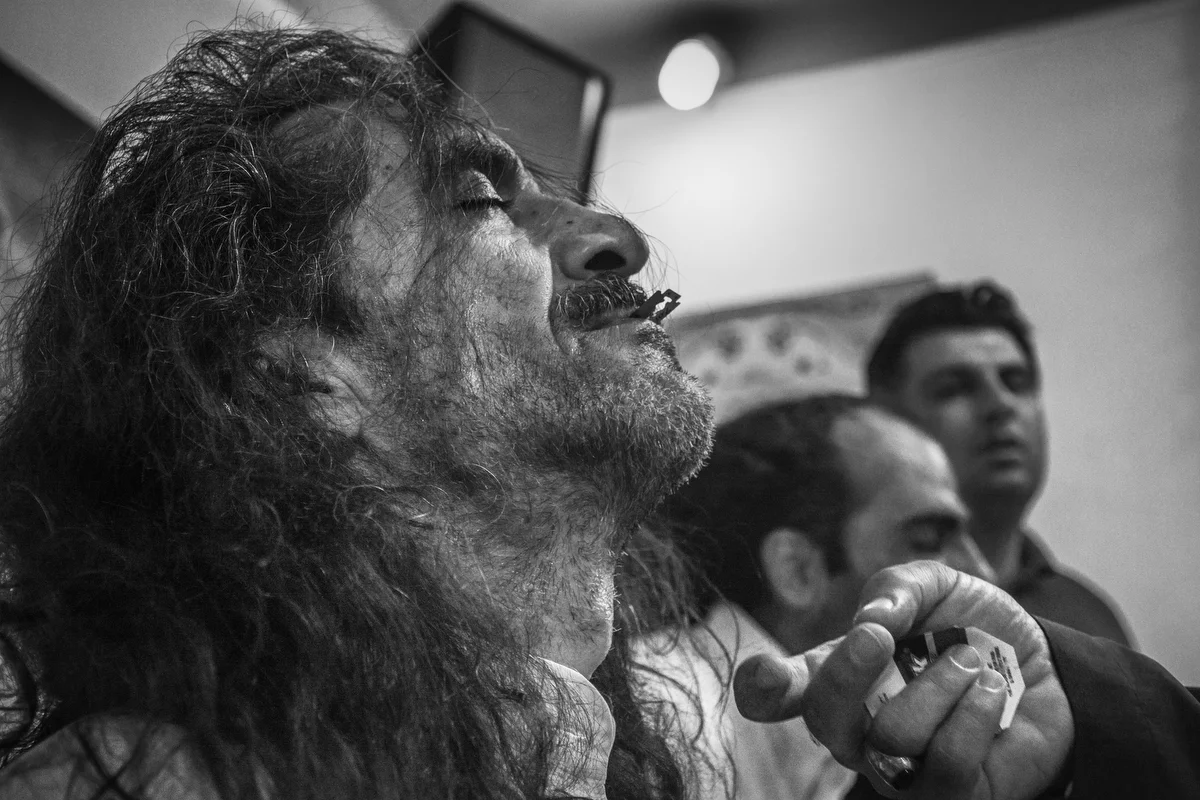
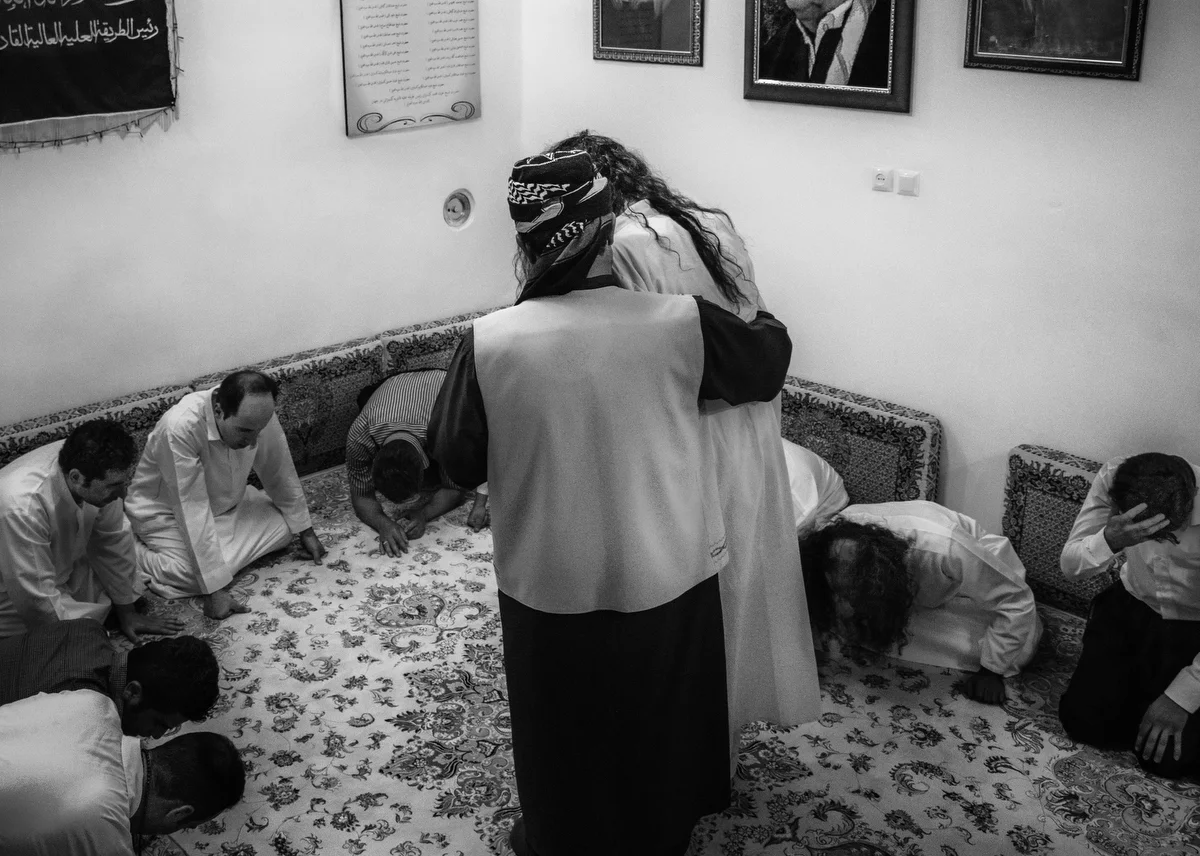
Shahriar, 68, has followed the Kasnazani dervish path for nearly three decades. Twice each week, on Monday and Thursday evenings, he walks to the local tekieh in Sanandaj, where groups of Kurdish dervishes gather for dhikr, prayer, and ritual devotion.
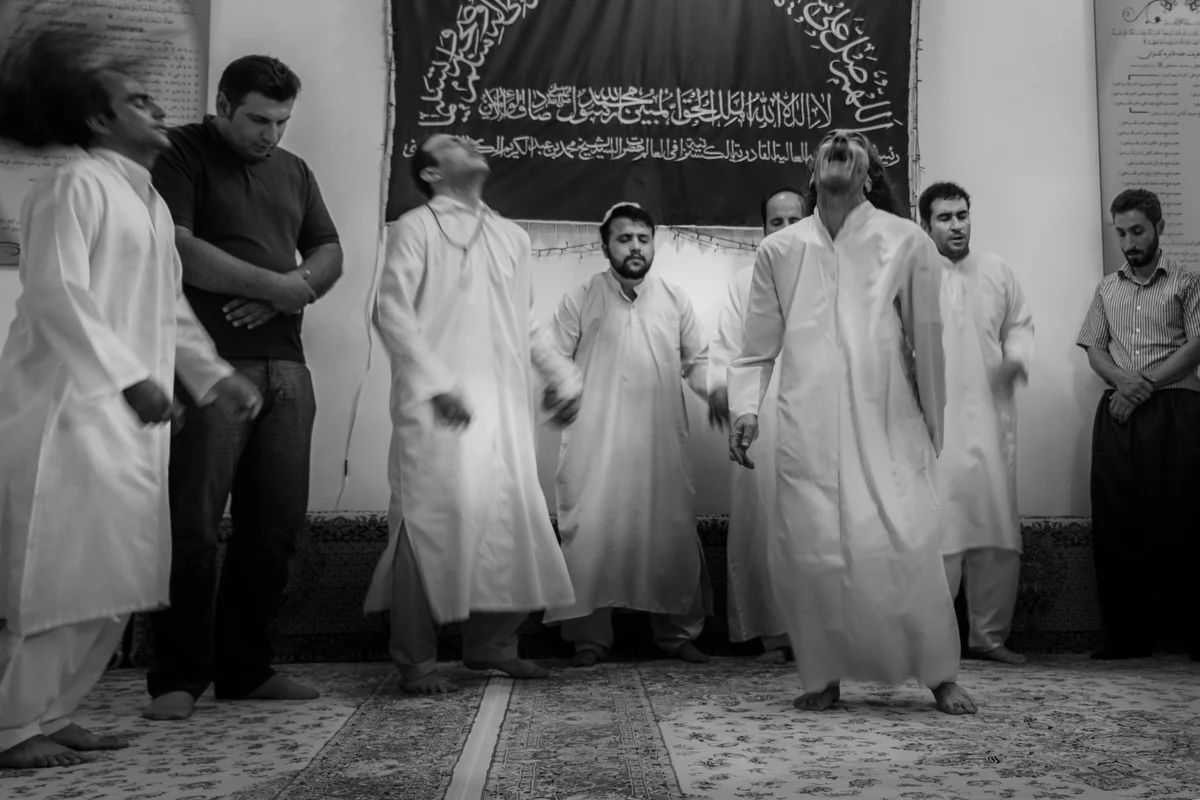
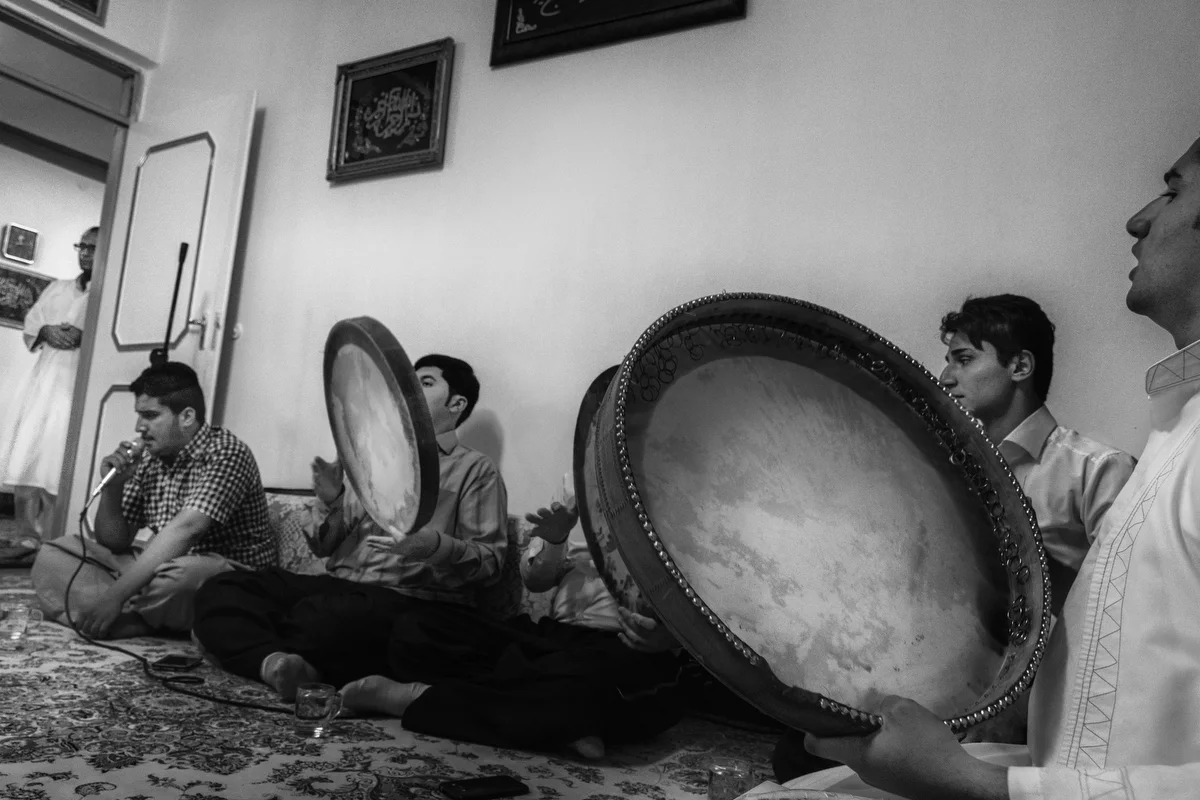
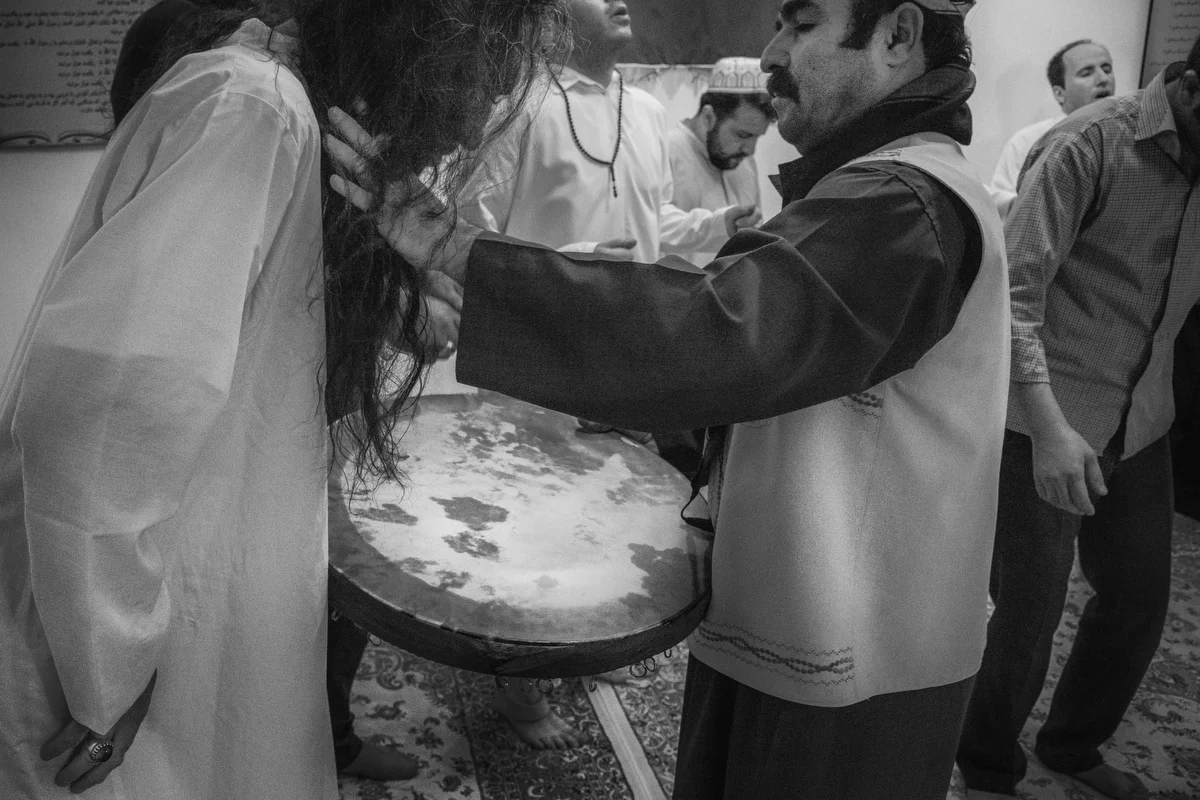
Inside the tekieh, the sound of the daf gradually fills the room. The repetition of God’s name intensifies as bodies sway in rhythmic remembrance. For Shahryar and the others, these ceremonies are not performances, but acts of spiritual surrender rooted in faith, discipline, and collective memory.
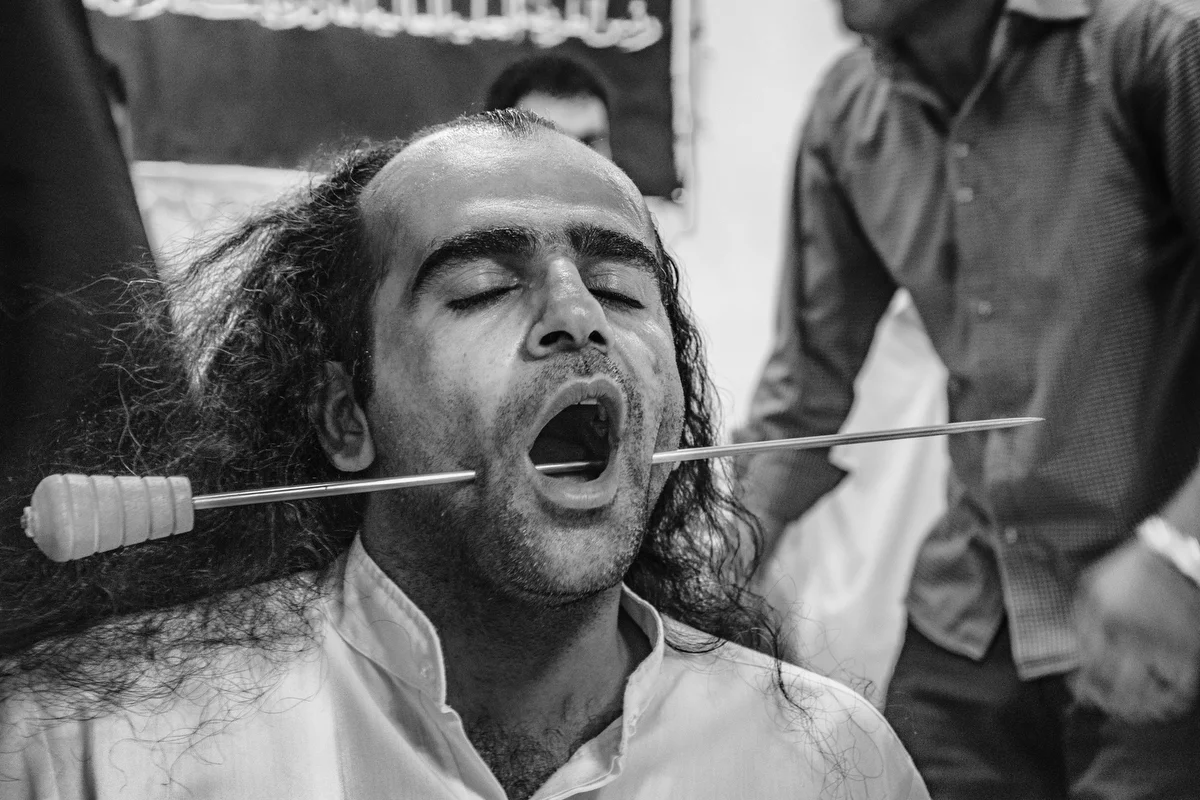
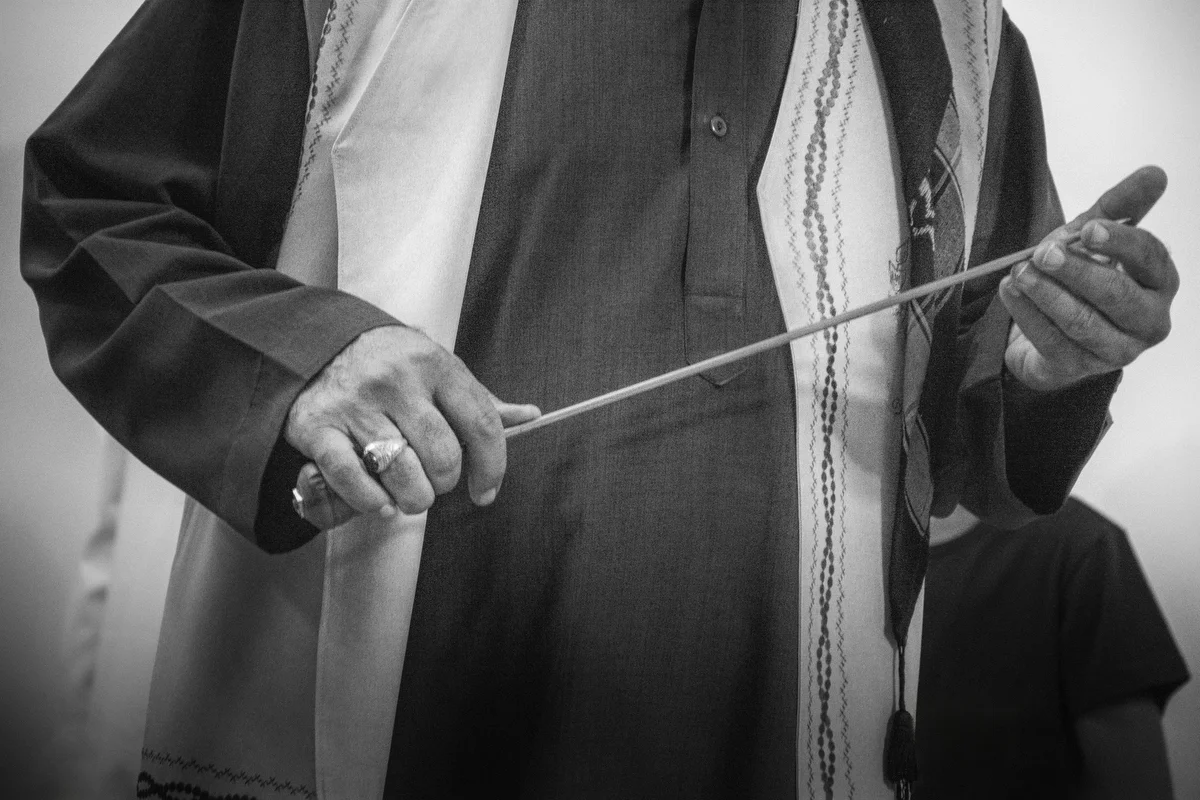
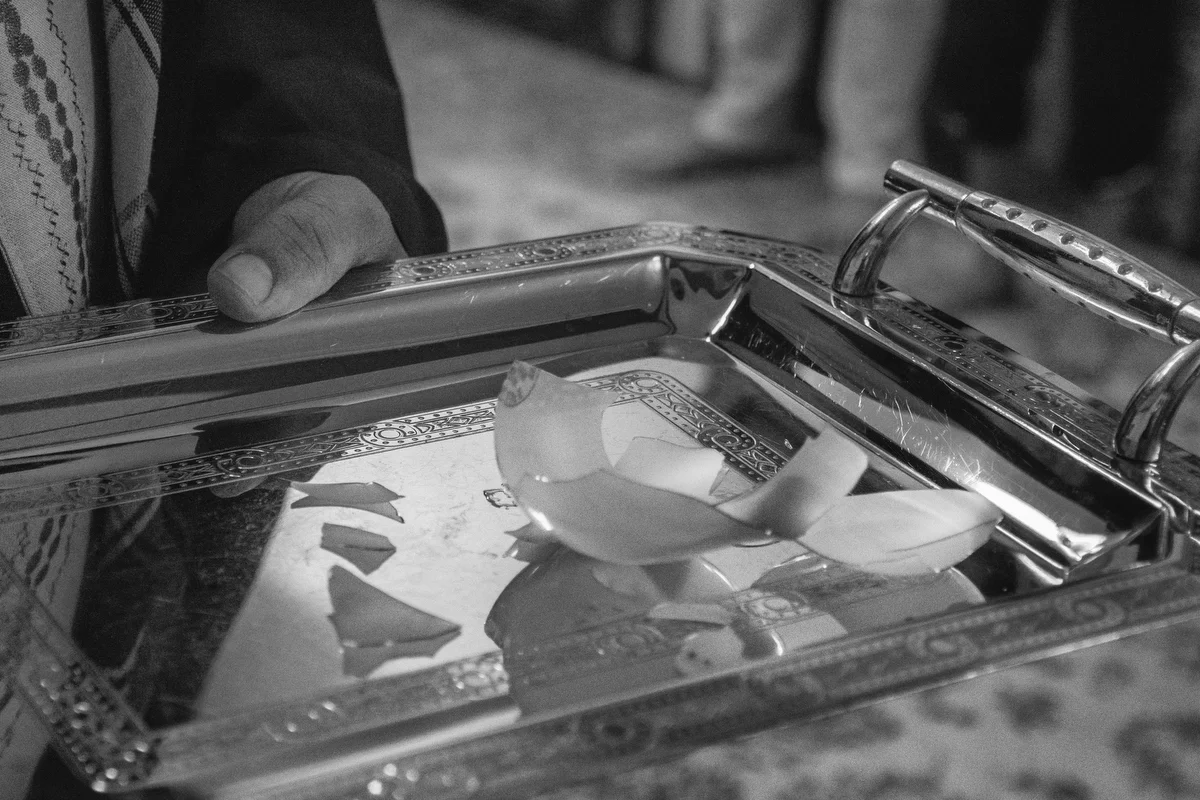
As the ritual deepens, some participants pierce their bodies with metal skewers, chew razor blades, or endure physical ordeals that appear painful to outsiders. Yet within the Kasnazani order, these actions are understood as manifestations of devotion and trust in God rather than self-harm. Shahryar believes that complete faith in divine unity allows the believer to overcome fear, suffering, and the hardships of life itself.
For him, spirituality is not separate from the body. It is something lived collectively through sound, endurance, movement, and prayer.
What does faith or spirituality mean to you now?
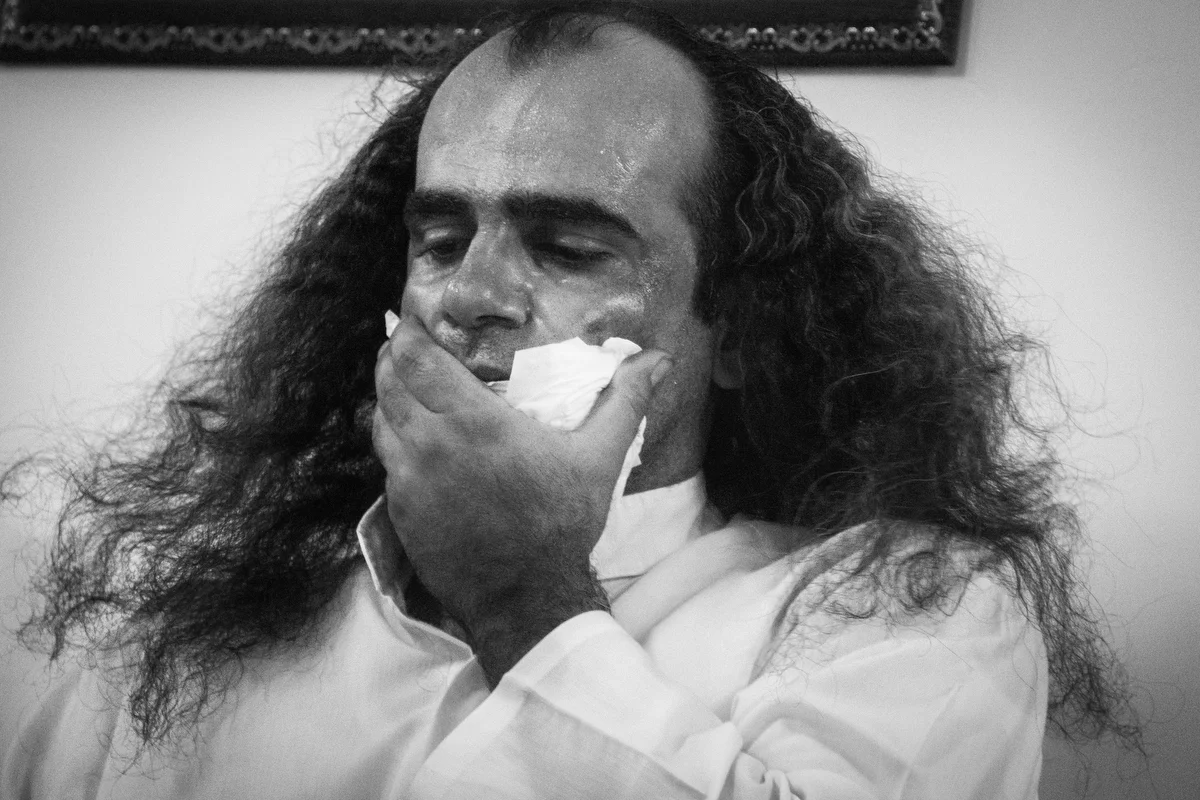
At sixty-eight, faith is no longer an abstract concept or a set of rules for me; it has become absolute surrender. As the body ages, you naturally realize how little control you have over the world. Walking into the tekieh and dissolving into the rhythmic pulse of the daf and the continuous chanting of God's name reminds me that I am part of something eternal.
Faith, to me now, is this deep, inner quietude. When I am immersed in the dhikr alongside my brothers, the anxieties of aging, loneliness, or tomorrow simply fade away. It grounds my daily existence and transforms my solitude into a profound connection with the divine unity.
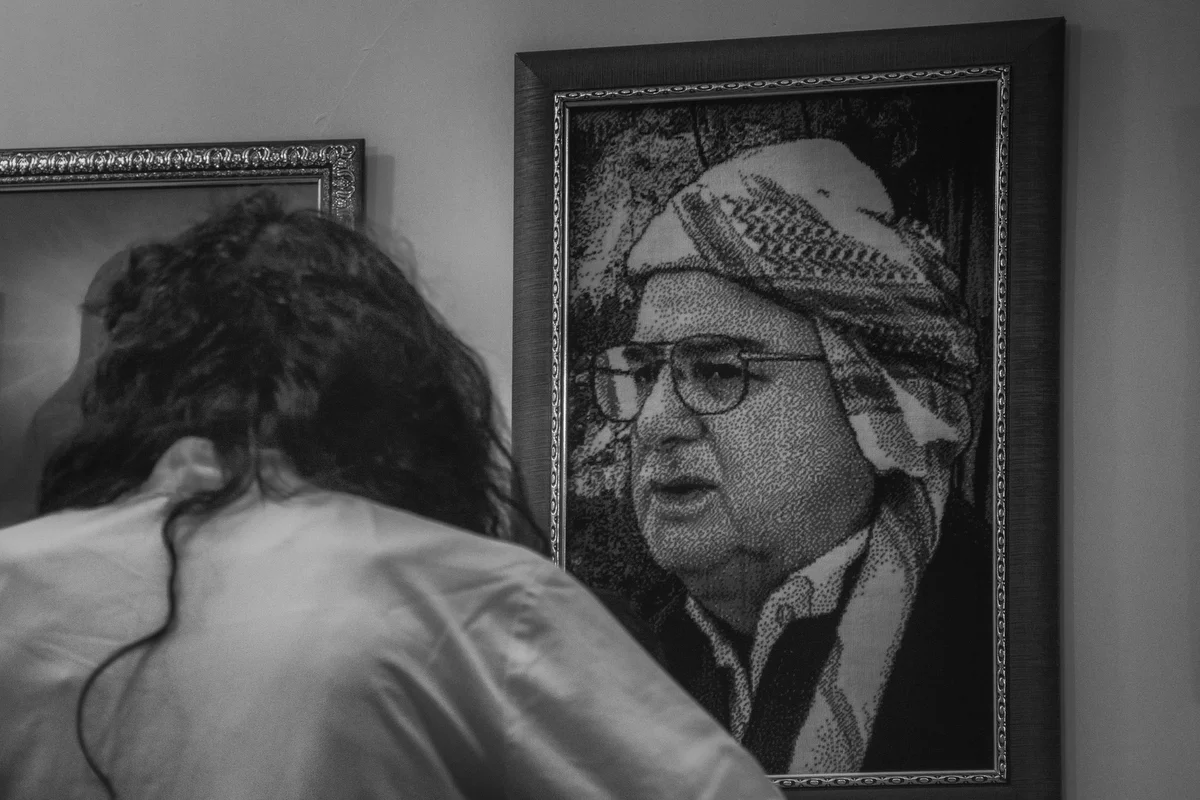
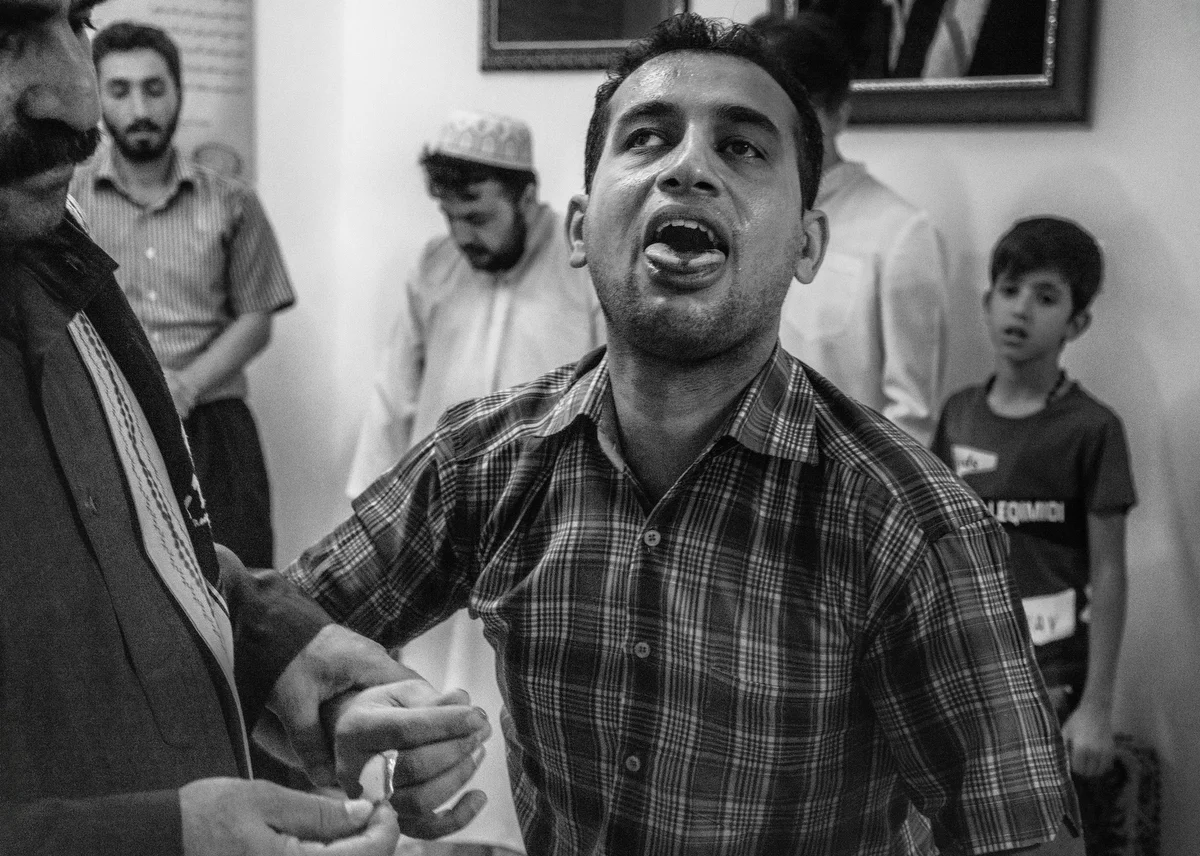
How has your relationship with spirituality evolved over your lifetime?
When I first entered the Kasnazani path nearly thirty years ago, I was drawn to the intensity of the rituals- the sounds, the movement, and the powerful energy inside the tekieh. In my younger years, spirituality felt connected to physical strength and ecstatic experience.
As I grew older, my understanding changed. The excitement of the ritual slowly became a quieter and deeper connection with God. Today spirituality is no longer something I search for only during ceremonies. It exists in my daily life, in every breath, and in the way I face suffering, aging, and uncertainty. My body may be weaker now, but my faith has become steadier.

What wisdom about spirituality would you like to pass on?
I believe many young people today feel lost because life moves too fast and leaves little space for silence or reflection. I want younger generations to understand that spirituality is not weakness. Faith can give a person patience, discipline, and inner strength during difficult times.
For me, faith has always been connected to community. Inside the tekieh, we remember God together, and that shared remembrance gives meaning to life. I believe that when a person truly trusts in God and feels connected to something beyond themselves, fear becomes smaller and hardship becomes easier to endure.
Life expectancy 2023










.svg)


