

(Portugese translation below / Traduçãoem português abaixo)
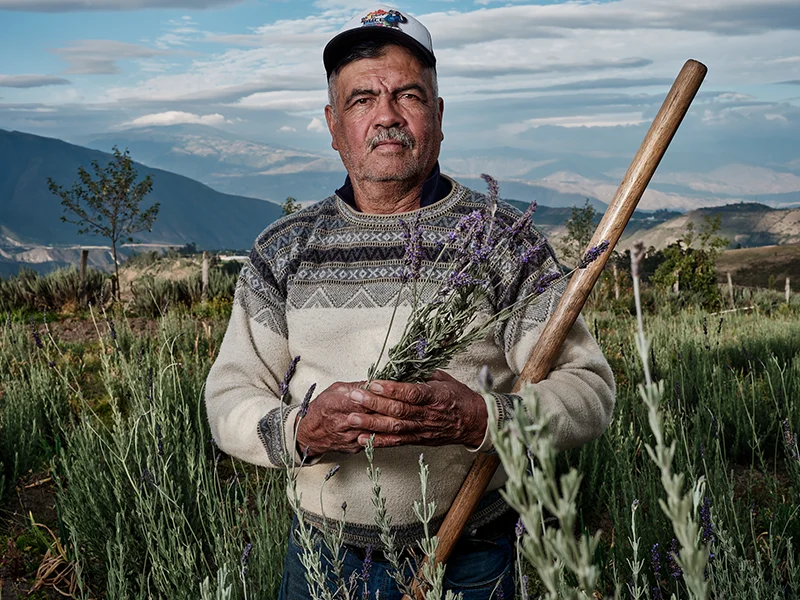
Api'soomaahka (William Singer III) is 60 years old and lives in the Kainai Nation near Stand Off, Alberta. At 60-years-old, Api'soomaahka is still becoming an elder in the traditional sense, but he has been working to restore the native grassland on his home parcel, called Naapi's Garden, as a means to create eco-system resiliency, food security and cultural reclamation in the face of climate change.
Api'soomaahka (William Singer III) tem60 anos e vive na Nação Kainai, perto de Stand Off, Alberta. Aos 60anos, Api'soomaahka ainda está se tornando um ancião no sentidotradicional, mas tem trabalhado para restaurar a pradaria nativa emseu terreno, chamado Jardim de Naapi, como forma de criar resiliênciaecológica, segurança alimentar e recuperação cultural diante dasmudanças climáticas.
What has climate change done here?
Climate change is intensifying drought cycles and making it harder for native plants.
We're still fracking for oil. We're still digging up the land to build things that are really unnecessary, digging up these really historic places with so many plant families, like they're just plowing them up and getting rid of them. So leaders are working backwards.
The key about this and what's being forgotten, is that connection to the land. So now we're really forgetting it. Now it's starting to be a wide valley, a huge gap. There's that lack of understanding of climate change and how it relates to yourself. But when you really look at it, and you begin to see how you're affected and how you could do something, like our project to restore native Prairie ecosystems.
It's the plants. They're the ones that educate us. They're the ones that help us. They're the ones here before us. They've helped us this long. They need our help now.
The most important thing is, do not lose the value of the land, and do not lose that connection. And when you lose that connection, then we have problems — people around on the street, people having problems with alcohol or personal problems.
As mudanças climáticas estãointensificando os ciclos de seca e tornando mais difícil para asplantas nativas.
Ainda estamos fazendo fraturamentohidráulico para petróleo. Ainda estamos escavando a terra paraconstruir coisas realmente desnecessárias, destruindo lugareshistóricos com tantas famílias de plantas, como se estivéssemosapenas arrancando tudo. Então os líderes estão trabalhando deforma contrária.
O ponto principal e o que está sendoesquecido é a conexão com a terra. Agora estamos realmenteesquecendo isso. Começa a se formar um vale largo, um enorme vazio.Falta entendimento sobre mudanças climáticas e como isso serelaciona com você. Mas quando você realmente olha para isso, ecomeça a ver como é afetado e como poderia agir, como nosso projetode restauração dos ecossistemas de pradaria nativos.
São as plantas. Elas nos educam. Elasnos ajudam. Elas estavam aqui antes de nós. Elas nos ajudaram atéagora. Agora precisam da nossa ajuda.
O mais importante é não perder ovalor da terra e não perder essa conexão. E quando você perde essaconexão, aí surgem problemas — pessoas na rua, pessoas comproblemas de álcool ou problemas pessoais.
What do you think world leaders have to do now to stop things from getting worse and to help us adapt?
Leaders need to step up. They need to understand they have a backbone to be able to tell others, even industry, we don't need your oil, we don't need your coal. This is what we have to do. We have got to live clean. They need to listen to the community. They really need to work for our children — those are the ones that they're forgetting. They're selling them out.
Os líderes precisam agir. Elesprecisam entender que têm coragem para dizer aos outros, inclusive àindústria: “não precisamos do seu petróleo, não precisamos doseu carvão”. Isso é o que precisamos fazer. Precisamos viver deforma limpa. Eles precisam ouvir a comunidade. Eles realmenteprecisam trabalhar pelos nossos filhos — esses são os que estãoesquecendo. Estão os traindo.
Life expectancy 2023













.svg)


