
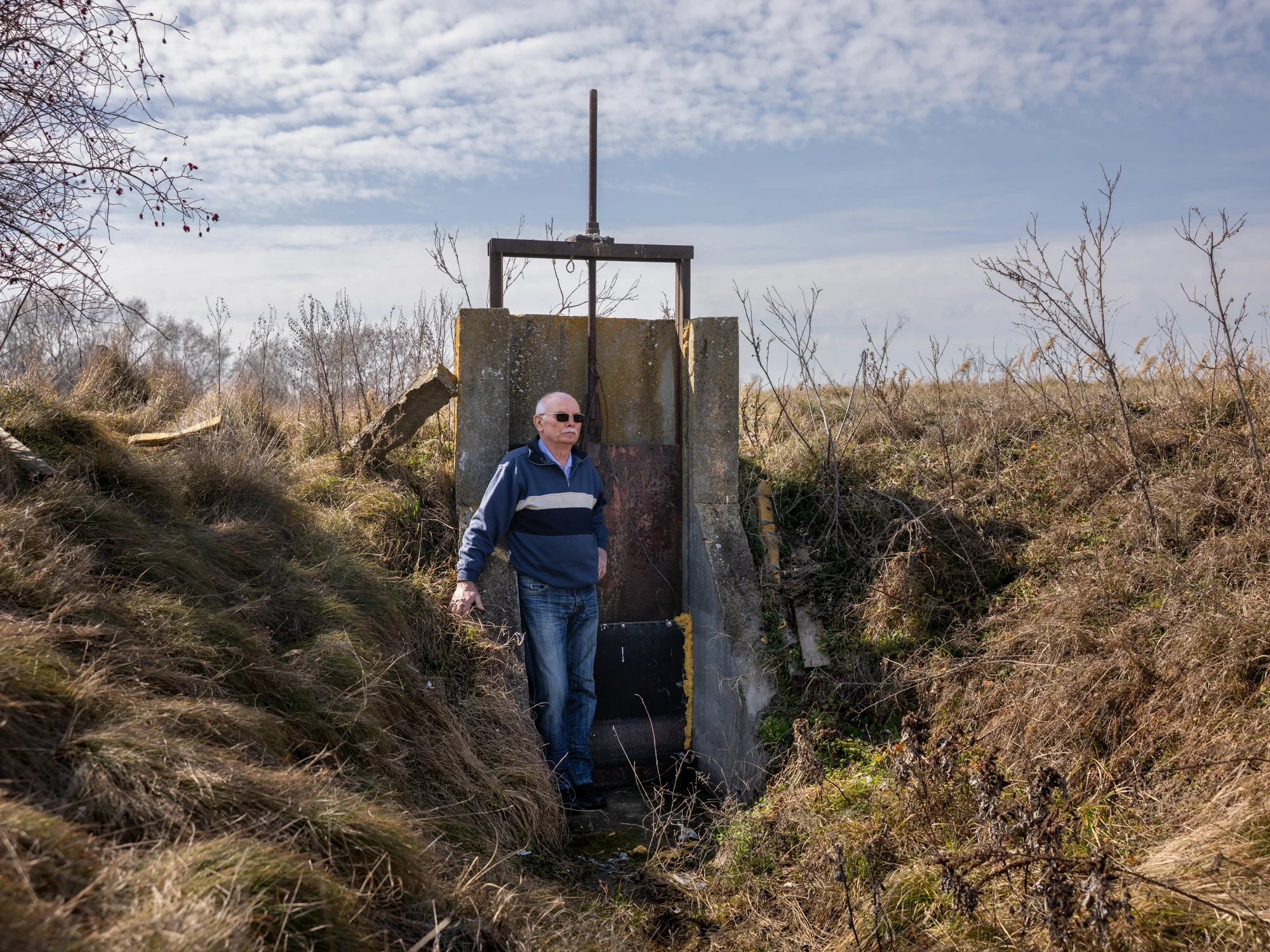
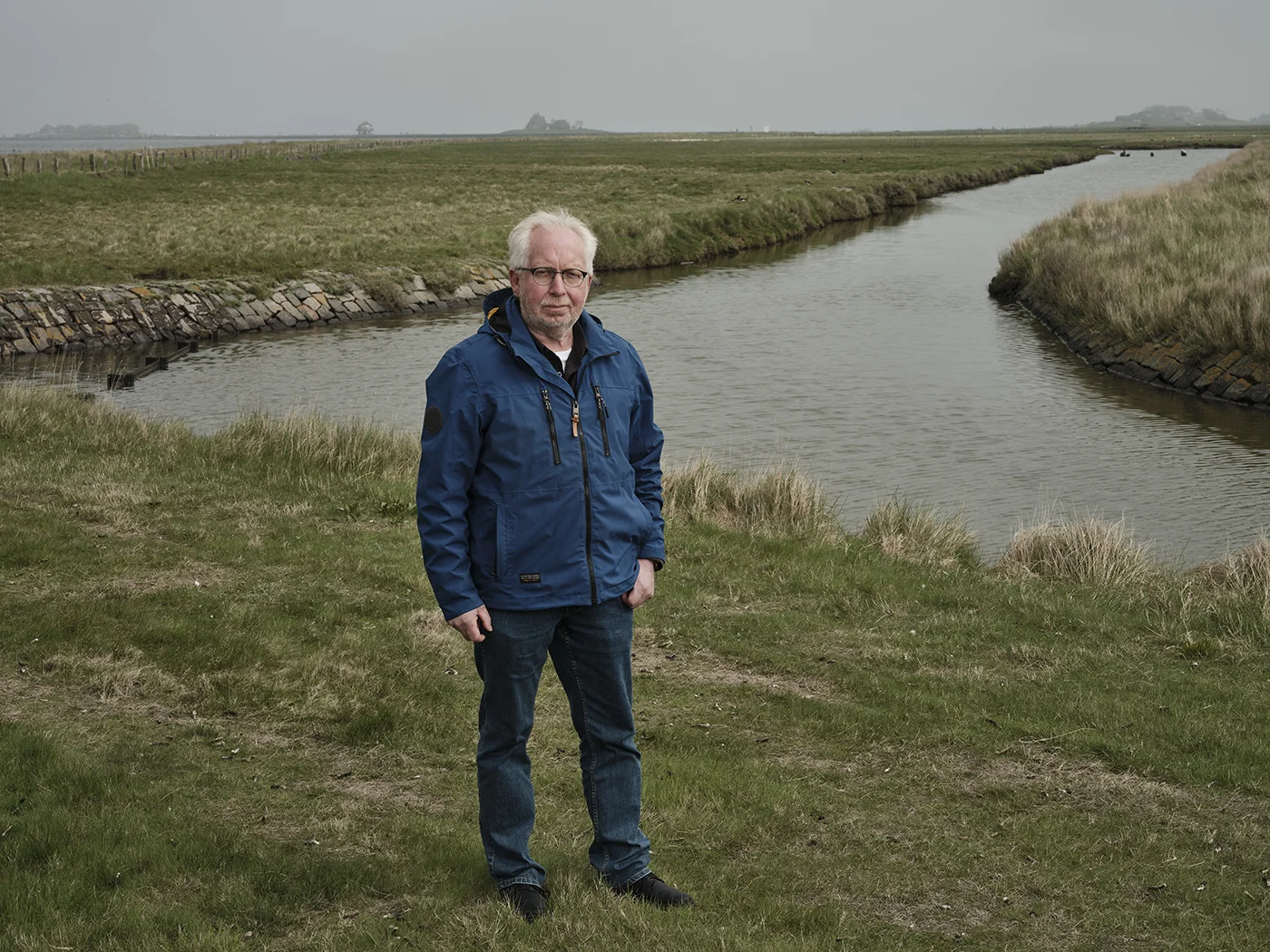
Károly Trembeczky (73) cultivates a hundred hectares of land in Nagylak, a village located on Hungary’s southeastern border with Romania, and also the southeast frontier of the European Union. The village lies where the sandy lowlands between the Danube and Tisza rivers meet the loess plateau of Bácska, in the southern part of Csongrád-Csanád County. Trembeczky is a seasoned farmer with decades of hands-on experience, and beyond agriculture, he has become a passionate advocate for sustainable land use and water policy in a region increasingly affected by drought. He is a member of Hungary’s National Chamber of Agriculture, contributing to its working groups on water management, environmental protection, forestry, and game management.
He has lived on this land all his life. He clearly sees how the Great Hungarian Plain is drying out: summers are getting hotter, rainfall is decreasing, and what used to be lush pastures is now cracked, dusty soil. He believes it’s not only climate change to blame—although recent droughts have been more severe than ever—but also the consequences of river regulation and drainage works from the past century. Massive canal systems and levees were built to gain farmland, but in doing so, the landscape’s natural ability to retain water was lost. The former wetlands and floodplains disappeared.
Trembeczky regulated the sluices running through his land to retain water, even though this practice was not officially authorized in previous years. However, following the severe drought of 2022, changes in water management regulations have made it possible for farmers to temporarily close drainage canals for the purpose of water retention. This regulatory shift now allows landowners like Trembeczky to legally support local water conservation efforts by managing these sluices under specific conditions. Additionally, Trembeczky collects rainwater in a closed system in his home garden, using it to irrigate his crops. He is firmly committed to supporting water retention efforts, believing that these actions are essential for creating a more sustainable and liveable environment for his community and future generations.
What has climate change done here?
As a child, in the sixties, this area had continuous water from autumn to spring. We skated and windsurfed on it. The earth still held water then, there was enough in the ditches, in the soil and even in the air. But over time, the landscape dried up. Already in the 1960s, efforts were being made to drain inland water and thus provide more growing soil. Hence the creation of these inland drainage channels, which are now leading the land, already drying up due to climate change, even further towards desertification. Rising temperatures, less snow in winter, more erratic rainfall and prolonged droughts have made farming here increasingly difficult.
Fields that once flourished are now cracking in the summer heat. The water that used to remain now runs off too quickly—if it comes at all. On my own land, I began regulating the drainage channels years ago, long before it was officially permitted. With just a few shovels of earth and a wooden plank, I blocked the channel to retain rainfall. If there was too much, I let some of it flow out. Today, although coordination with the water authorities is still required, current legislation allows farmers to temporarily block inland drainage ditches in this way. The priority is no longer to get rid of excess water, but to keep it in the landscape, to return water to the land.
What do you think world leaders have to do now to stop things from getting worse and to help us adapt?
My message to politicians is this: Protect the trees, the waters, and the plants! We are equal to them! If they disappear, our happiness disappears. Without them, there is no smile on our faces, no joy in our lives. Yet politicians live and operate in the same environment as we do, but they are simply locked into a narrow political space and rarely venture out into the open, into nature. They are so preoccupied with the things they call work that they forget there is life beyond the horizon. I urge them to rise a little higher, take a broader view, and really see the landscape.
The worsening climate situation is largely due to the excessive consumption of oxygen. The ozone layer is becoming thinner, yet we continue to cut down our forests at an unsustainable rate. These forests, which are our natural oxygen factories, are being destroyed. On a global scale, forested areas are shrinking significantly. As the oxygen and ozone layers become thinner, the ultraviolet (UV) rays of the sun reach the Earth’s surface more directly, increasing the temperature. Evaporated water in the air condenses into vast moisture masses in the clouds, leading to more storm damage and flooding. The solution to these problems lies in afforestation, in building natural oxygen-producing forests on a global scale. We must retain surface freshwater, especially in flatland areas like the Great Hungarian Plain, wherever possible! We must green our landscapes and do it urgently!
Life expectancy 2023













.svg)


